
How to Analyze Czech Stocks Before Trading Them via Share CFDs
Domestic firms have never been as attractive to Czech investors as they are now, who are increasingly interested in financial markets that are becoming simpler and more user-friendly. To the investors considering local equities, it is vital to analyze before making any trades. Whether one is considering large internationally known established companies or those which are newly listed on the Prague Stock Exchange, careful consideration can be the key to the difference between short-term speculation and long-term assurance.
It mostly starts with a basic curiosity about how a business functions and what its worth is. The first step is to understand the basics of the business model of the company. What is the business of the company? Who are its clients? Is it in an expanding industry or an industry that has stagnated? These queries assist traders to commence developing a mental image regarding the direction the stock could be going. Although Czech stocks, just as any other stocks, are heavily influenced by the global trends, the local influences, such as the government policy, consumer behavior, and domestic economic statistics also matter.
The next step is financial health assessments. To understand whether a company is solid, traders commonly examine the growth of revenues, margins, amount of debt, and cash flow. Some companies have their reports in Czech and English, which is especially helpful for non-native speakers in the Czech market. It is critical to understand the numbers, it is equally important to put them into perspective. To give an example, a dip in profits may appear to be worrying at first sight but in case it is related to the temporary investment in expansion, it may be on the contrary a sign of strength and aspiration.
The analysis does not merely end at financial statements. Industry reports, news headlines and even government press releases can be informative. To take some examples, a new subsidy on renewable energy may favor Czech energy companies, and new regulations may squeeze banking-sector margins. By keeping abreast with such developments, traders may have a better picture of how such external factors could affect the prices of stocks. In this regard, making it a habit of daily monitoring news on trusted financial sites is an addition to the routine of anyone who is serious about trading.
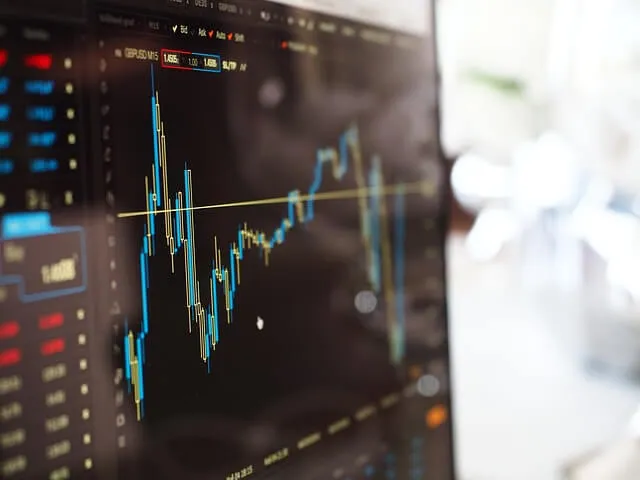
Image Source: Pixabay
This is where technical analysis plays a major role, especially for those who are using tools such as share CFDs. Traders can use price charts, support and resistance levels, and volume indicators to determine the timing and possible entry or exit points. Whereas there are traders who use only fundamentals, others incorporate both technical and fundamental analysis to create a more comprehensive image. Such flexibility is achievable with share CFDs as they enable short-term positions which might not be purely based on the long-term value of a company.
Most traders test their strategy in demo accounts before making any trades. This practical knowledge assists in perfecting the strategies and the chances of impulse action are also minimized. Practice will also help develop confidence, particularly in a market such as the Czech Republic where local events can impact upon stock performance immediately and capriciously. It is preferable that by the time one is getting into a live trade, he or she already understands not only the numbers of the company but also has a good feel on the greater market within which the company operates.
Preparation is not a checklist for the retail traders in the Czech Republic. It is a way of thinking that is inquisitive, discerning and life-long learning. With the changing trading environment, traders who care to analyze their options are much better positioned to ride the highs and lows with a better sense of direction and purpose.

Comments