
Why MT4 Refuses to Die in Singapore Despite Newer Platforms Entering the Market
Platform lifecycles in competitive markets tend to follow a predictable curve in which user bases build over time while alternatives mature and the cost-benefit calculus of switching eventually favors migration. MetaTrader 4 has defied that curve in Singapore’s retail trading market with a persistence that warrants more analytical attention than the conventional explanation of user inertia provides, since what actually sustains the platform’s relevance runs deeper than reluctance to change and is better understood as the nature of how experienced traders relate to their working environment. Understanding why MT4 continues to command significant market share in a city-state with one of the world’s most sophisticated financial technology ecosystems requires examining the forms of value that accumulated expertise generates and why those forms resist replacement through feature additions alone.
The indicator and Expert Advisor ecosystem built on the platform represents a community time investment that compounds in ways individual switching decisions do not accurately reflect. Decades of co-evolution within Singapore’s trading community have produced a library of tools whose quality reflects years of iterative refinement, and that accumulated value does not transfer to competing platforms without an equivalent community investment that takes years to develop. A Singapore trader contemplating migration to a newer environment is not simply weighing personal configuration work against potential improvements. They are leaving an ecosystem whose aggregate resources were built through the collective effort of practitioners who are unlikely to reconstruct equivalent resources on a platform they have not invested in, a network effect that sustains the platform’s value well beyond what a feature-by-feature comparison would justify.
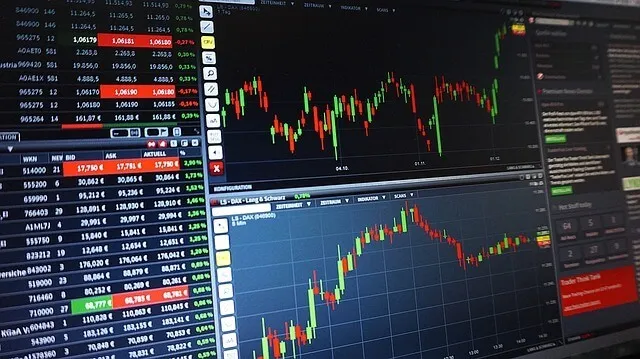
Image Source: Pixabay
The platform’s demonstrated reliability during extreme market conditions has built a level of trust that newer platforms can only earn through equivalent exposure over time. Singapore traders who were active during significant market events, including flash crashes, central bank surprises, and liquidity crises, recall platform performance during those episodes with particular clarity, given how directly and immediately platform failure affects outcomes in such moments. The platform’s track record under those conditions has become a form of institutional memory within Singapore’s trading community that positions it more favorably than alternatives whose behavior under equivalent stress has not yet been established over a comparable period.
The platform’s status as a structural market fixture rather than a declining legacy service has been sustained by the broker ecosystem serving Singapore traders. The vast majority of MAS-regulated and internationally licensed brokers serving Singapore retail clients still offer it as either a primary or fully supported secondary platform, ensuring the platform’s continued availability regardless of what broader migration trends may suggest about its long-term trajectory. Traders who have built their practice around it benefit from knowing the platform will remain available and that they will not be forced to change brokers for commercial reasons, a practical assurance that keeps practitioners on the platform even in the absence of strong motivation to migrate.
The asymmetry between the learning curve of staying and that of switching generates a rational friction that should not be dismissed as mere inertia. A Singapore trader who has taken three years to build up an analytical fluency in MT4, a personalized workspace and library of tested settings has amassed real expertise that is not just inconvenienced, but actively damaged by migration. Rebuilding equivalent operational familiarity in a new environment represents a real productivity cost during the transition period that practitioners rationally weigh against the benefits of the alternative. Those benefits must be substantial and specific rather than marginal and general to justify that investment, which is why practitioners who do migrate tend to cite specific capability gaps rather than a general preference for a different environment.
The platform’s persistence in Singapore is ultimately less about its relative quality compared to available alternatives and more about the nature of expertise itself. Tools that have been truly mastered are not used as their specifications suggest they should be; familiarity accumulated over time opens dimensions of use and understanding that formal feature comparisons do not capture. Singapore traders who have genuinely mastered the platform are not operating in the same environment as beginners who happened to start there, and the depth of their relationship with that environment is precisely what feature-level platform comparisons systematically fail to account for.

Comments